
The higher you go in your career, the quieter the market becomes. This is especially true for an executive job search in Switzerland.
At the senior leadership level, opportunities rarely arrive through easy online applications or public job boards. Conversations become more discreet. Hiring becomes slower. Trust matters more than visibility.”
And after sending dozens of applications without meaningful traction, many senior professionals begin questioning themselves.
Especially in Switzerland.
You may have led global teams, managed large budgets, transformed business units, or built decades of expertise. Yet suddenly, the market feels silent.
I mean, exhaustingly silent.
However, silence does not mean absence.
This is one of the biggest misunderstandings I see in the executive job search in Switzerland. Many of the most valuable leadership opportunities are simply not visible to the public. They move quietly through referrals, executive search firms, trusted networks, and private conversations long before a job description appears online.
The Swiss market is not empty.
In many ways, it is abundant.
The challenge is learning how to access opportunities that operate beneath the surface.
And this is where many experienced executives unintentionally position themselves incorrectly.
When uncertainty rises, the natural instinct is often to apply harder, network more aggressively, and push volume. But let me tell you this, true seniority rarely moves with panic.
A successful executive job search in Switzerland is not about sending 1,000 applications. It is about understanding the unspoken signals behind Swiss business culture, building the right strategic relationships, and positioning yourself as a trusted peer rather than another candidate competing for attention.
At this level, calmness becomes part of your positioning.
As I always tell my clients: The right energy attracts the right conversations.
And once you understand the covert language of Swiss executive hiring, the invisible doors begin to open differently.

TL;DR: The Executive Summary
- The Hidden Market: During an executive job search in Switzerland, the most valuable opportunities are rarely posted on public job boards; they move quietly through trusted, private networks.
- The Covert Language: Swiss business culture favors discretion and consensus (Konsensprinzip). Success requires quiet confidence and stakeholder alignment rather than aggressive self-promotion.
- Value over Volume: Sending hundreds of applications positions you as a standard candidate. To access the hidden job market, you must position yourself as a “strategic peer” who solves expensive business problems.
- Attraction over Chasing: Shift your strategy from applying online to conducting high-value “informational coffees” that naturally build trust with decision-makers.
The “Covert Language” Defined, Actions Over Paper
One of the biggest mistakes I see senior professionals make during an executive job search in Switzerland is assuming they must become louder to stay visible.
Many of my clients thought that they need to market themselves aggressively. Speak bigger. Sell harder. Constantly prove value.
However, the Swiss business culture often responds differently.
Here, excessive self-promotion can quietly create resistance instead of trust.
Especially at senior level.
The executives who move well through the Swiss market usually communicate with calm confidence. They do not need to dominate every conversation or constantly announce their achievements. Their competence is felt before it is explained.
This is part of the covert language of Swiss executive hiring.
Understated competence carries weight.
Additionally, many experienced professionals overestimate how much influence the CV alone has at C suite level.
Of course, your executive CV matters. Your background must still show credibility, scope, and strategic impact.
But paper only gets you so far.
At senior level, hiring decisions are rarely based on qualifications alone. Decision makers are evaluating something deeper.
- Can this person represent the company with maturity?
- Can they navigate pressure calmly?
- Can they build trust across departments, boards, investors, and leadership teams?
Before a resume is even exchanged, people are already forming impressions through conversations, introductions, demeanor, and reputation.
This means your presence becomes part of your positioning.
And in Switzerland, presence is often quiet.
Another important cultural layer is something known as the Konsensprinzip, or consensus principle.
Swiss organizations are often highly collaborative in their decision-making. Even powerful executives are expected to align stakeholders carefully rather than operate as isolated decision makers.
In simple terms, companies are not only asking whether you are capable.
They are asking whether people can work with you.
- Can you bring different groups together during uncertainty?
- Can you navigate disagreement without creating unnecessary friction?
- Can you lead with steadiness instead of ego?
This is why the lone wolf executive archetype often struggles in Switzerland.

The market rewards leaders who create alignment, stability, and trust, especially during periods of transformation or complexity.
And once you begin understanding these unspoken expectations, the Swiss executive market starts making much more sense.
From “Candidate” to “Strategic Peer”
When the market becomes uncertain, even highly experienced executives can fall into survival mode.
Therefore, naturally, many senior professionals respond the same way.
They apply more.
More applications. More outreach. More urgency. More pressure to stay visible.
At first, this feels productive. It feels like momentum.
However, the more volume-driven the process becomes, the more your positioning starts shifting away from senior leadership presence and toward standard candidate behavior.
Your energy changes.
At executive level, people notice energy long before they notice qualifications.
This is one of the quiet realities of an executive job search in Switzerland.
The market responds strongly to calmness, precision, and strategic focus.
Not panic disguised as productivity.
This is why sending hundreds of applications often creates diminishing returns at senior level. It places you into high-volume recruitment pipelines and Applicant Tracking Systems (ATS) designed for operational hiring rather than strategic leadership selection.
(If you want to understand exactly why these algorithms reject senior talent, you can read my complete guide on how to bypass the ATS in your Swiss executive job search).
But let me reassure you that true executive hiring rarely works through those rigid systems anyway.
You do not need 100 interviews.
You need the right two.
The goal is not maximum exposure.
The goal is meaningful alignment.
Usually, one strong conversation with the right decision maker carries more weight than dozens of cold applications sent into the market without direction.
And this leads to another important shift.
The way you speak about your value also needs to evolve.
Many executives unintentionally continue communicating like candidates. They focus heavily on explaining their background, responsibilities, and achievements.
- “Here is what I have done.”
- “Here are the teams I managed.”
- “Here are the positions I held.”
Of course, credibility matters.
But at C suite level, decision makers are rarely searching for another impressive resume alone.
They are looking for reassurance, strategic safety, and most importantly, they are asking themselves one core question:
“What expensive business problem can this person help us solve?”
This is where your positioning becomes significantly more powerful.
The moment you stop presenting yourself as a professional seeking employment and start positioning yourself as someone who can solve costly operational, leadership, or transformation problems, the conversation changes completely.
You stop sounding like an expense.
You start sounding like an investment.
In Swiss business culture, this distinction matters deeply.

Swiss organizations tend to move carefully. Stability, predictability, and measured decision making are often highly valued, especially at senior leadership level.
This also means companies are not always looking for radical disruption.
Very often, they are looking for thoughtful improvement.
For this reason, executives who position themselves as aggressive “change agents” can sometimes create quiet resistance without realizing it.
The safer and more effective positioning is often more nuanced.
Instead of saying:
“I will reinvent everything.”
You should replace it with:
- “I understand the complexity of your environment.”
- “I have navigated similar transitions before.”
- “We improved performance while maintaining operational stability.”
That language feels different.
It lowers perceived risk.
It signals maturity, emotional control, and strategic awareness.
And these qualities carry enormous weight in the Swiss executive market.
Especially when companies are navigating uncertainty themselves.
The executives who attract the strongest opportunities are rarely the loudest people in the room.
They are usually the ones who make complex problems feel manageable.
I have discussed different strategies to help you overcome age bias in Switzerland in a dedicated guide.
How to Conduct a “Hidden Market” Conversation

Once you understand that the Swiss executive market moves through trust, discretion, and strategic relationships, the next question becomes:
“How do I actually enter these conversations?”
And this is where many executives either overcomplicate the process or approach it with the wrong energy.
Accessing the hidden job market in Switzerland does not require becoming louder, more aggressive, or hyper visible online.
It usually begins with small, intentional steps repeated consistently over time.
This is also why many senior professionals misunderstand networking in Switzerland.
They enter conversations hoping to uncover openings as quickly as possible. However, when the interaction feels transactional, people instinctively create distance.
Especially in Swiss business culture, where trust tends to build carefully and progressively.
The strongest executive conversations feel very different.
They feel calm, intellectually engaging and mutually valuable.
And most importantly, they feel peer-to-peer.
In Switzerland, these conversations are a normal part of executive networking. Usually, they are short, low-pressure meetings designed to exchange perspectives about industries, leadership challenges, market shifts, or business realities.
Not direct requests for employment.
Interestingly enough, senior leaders often enjoy these conversations when they feel the other person genuinely understands the complexity of their environment.
This means your role in the conversation is not only to ask questions.
It is also to contribute value.
Many executives make the mistake of becoming too passive during networking conversations. They ask thoughtful questions, but never strategically position themselves within the discussion.
The goal is not interrogation.
Again, remember, the goal is alignment.
You want the other person to begin naturally associating your experience with relevant business challenges inside their organization.
This is how opportunities quietly emerge.
Surface-level networking questions rarely create meaningful engagement.
But strategic questions often do.
For example, you can start talking about some business pain points:
- “How is your organization navigating the current market pressure?”
- “What leadership challenges are becoming more visible in your sector right now?”
- “Where do you see operational friction increasing over the next 12 months?”
Questions like these immediately elevate the conversation.
Once you understand those pressure points, you can begin positioning your expertise naturally instead of forcing self-promotion into the discussion.
For example:
- “We experienced something very similar during a restructuring phase in my previous organization.”
- “One thing that helped us reduce internal resistance was…”
- “In a comparable market transition, we found that stakeholder alignment became critical very early.”
Notice the difference in language.
The conversation becomes collaborative rather than self-centered.
This “we” mentality matters deeply in Swiss executive communication.
It signals emotional intelligence, maturity, and the ability to operate effectively inside complex organizational systems.
And importantly, it lowers perceived risk.
The other person no longer sees you as someone trying to sell themselves aggressively.
They begin seeing you as a strategic peer who understands business reality at leadership level.
This subtle shift creates rapport surprisingly quickly.
Especially in environments where discretion and trust carry enormous weight.
This is also why the hidden market rarely opens itself inside highly visible networking environments.
It usually does not happen through generic networking mixers or through performative visibility on LinkedIn.
In Switzerland, the most valuable executive conversations often happen in smaller, quieter spaces where credibility already exists.

For example:
- Informational coffee meetings between senior professionals.
- Executive search firm intake conversations with Tier 1 headhunters who quietly manage parts of the hidden market.
- Industry associations, alumni groups, and specialized leadership communities where trust develops over time.
These environments operate differently, and opportunities often begin long before a public job description ever appears online.
Executives who learn how to navigate these conversations calmly and strategically often gain access to opportunities that remain completely invisible to the broader market.
Common Mistakes During an Executive Job Search in Switzerland
From my experience, most of the time, qualified executives struggle in the Swiss market not because they lack experience, but because they unintentionally send the wrong signals.
And at senior level, signals matter enormously.
One of the most common mistakes is applying too broadly in an attempt to “get a foot in the door.”
After months without traction, I understand it can feel logical to lower the target and apply for positions beneath your level of experience.
However, in Switzerland, this often creates confusion instead of opportunity.
Hiring teams immediately begin asking difficult internal questions.
- “Why is this executive applying for this role?”
- “Will they stay long term?”
- “Will they become disengaged quickly?”
- “Can we realistically afford this person later?”
This is where the word “overqualified” often appears.
But in many cases, overqualified does not actually mean “too capable.”
It often means:
- “Too expensive.”
- “Too senior for the reporting structure.”
- “Potentially unstable for the role.”
Or simply:
“Higher perceived hiring risk.”
Swiss hiring culture tends to value predictability and long-term fit very strongly. Especially at executive level, companies are cautious about introducing leadership dynamics that may disrupt hierarchy, internal balance, or team stability.
This means seniority itself sends a signal.
And when your positioning becomes unclear, trust can weaken very quickly.
Another common mistake is over explaining an international background without grounding it in Swiss business relevance.
Many expats and global executives understandably want to demonstrate the scale of their international experience.
But sometimes the conversation becomes too focused on global complexity, while missing the question Swiss employers are quietly asking:
“How will this translate into our environment?”
The Swiss market tends to value localization, adaptability, and cultural alignment very highly.
This means companies want reassurance that you understand how Swiss organizations communicate, make decisions, manage stakeholders, and build trust internally.
Global experience becomes powerful when it is connected back to local business realities.
Not when it remains abstract or overly internationalized.
Another subtle mistake appears in the way executives present achievements.
Many senior professionals lead conversations with accomplishments alone such as:
- Revenue growth.
- Transformation projects.
- Large team leadership.
- International expansion.
Of course, these achievements are important in your story.
But without business context, they can sometimes feel disconnected from the company’s immediate concerns.
This is why I always emphasize that relevance matters more than volume.
The strongest executive positioning connects past achievements directly to present business needs.
If you can shift from:
“Here is everything I achieved.”,
To something like:
“Here is how my experience may help solve the type of complexity your organization is navigating now.”
It would create much stronger alignment.
Finally, many executives underestimate how deeply Swiss working culture influences hiring decisions, especially for international professionals.
Technical capability alone is rarely enough at senior level.
Organizations are also evaluating communication style, stakeholder management, discretion, consensus building, emotional steadiness, and long-term cultural fit.
In Switzerland, trust is often built gradually rather than emotionally or aggressively.
And executives who understand this rhythm usually navigate the market much more successfully than those trying to force momentum too quickly.
Stop Chasing, Start Attracting
One of the hardest parts of an executive job search in Switzerland is that the transition is rarely only professional.
Very often, it becomes deeply personal too.
Especially for expats rebuilding themselves in a new country.
For leaders navigating layoffs after decades of stability.
For executives moving across industries and suddenly questioning where they fit.
Or for professionals whose identity became strongly connected to a title, position, or organizational status.
At senior level, career transitions can quietly shake confidence in ways many executives never expected.
The truth is when the market becomes silent, people do not only question their strategy.
They begin questioning their value.
And this is exactly why so many experienced professionals unintentionally start chasing the market instead of attracting the right opportunities.
The pressure grows internally.
“I need to prove myself.”
“I need more applications.”
“I need to convince people.”
However, the Swiss executive market rarely responds well to force.
It responds to steadiness, clarity, and calm confidence.
Most importantly, to executives who understand the value they bring without needing to oversell it constantly.
Once you begin communicating like a trusted strategic peer instead of a panicked job seeker, the quality of your conversations changes naturally.
People begin listening differently.
Your experience starts landing with greater credibility because it is no longer presented from urgency, but from strategic value.
Every so often, I’ve seen many people complaining about the Swiss job market, that it is closed, it is tough, and so on… I always tell my clients, we can choose to believe it and do nothing or we accept it and adapt our strategy.
Have invisible doors opened for you
If you are currently navigating a C-suite career transition in Switzerland, you do not have to decode this process alone.
Through strategic coaching, executive positioning, Swiss market guidance, and high-level networking strategy, I help senior professionals strengthen their executive presence, navigate the hidden market, and start attracting opportunities that truly match their level of expertise.
You can schedule a clarity call with me today to ask any questions you might have.
Your Presence Speaks Before Your CV Does
At executive level, people often form impressions long before they read your resume carefully.
Sometimes before they even open it.
This is especially true in Switzerland, where trust, professionalism, and subtle signals carry enormous weight.
Your executive presence is no longer limited to your CV alone.
It includes your LinkedIn profile.
The way you introduce yourself.
The clarity of your positioning.
Your communication style.
Even the overall energy people feel when interacting with you online or in person.
This is why personal branding in Switzerland is not about becoming performative or overly visible online.
It is about coherence.
- Does your communication match your level?
- Does your presence reflect calm authority?
- Do people immediately understand your strategic value when they encounter your profile?
- And importantly, does your image support the level of trust you want to create?
This goes far beyond simply “having a professional photo.”
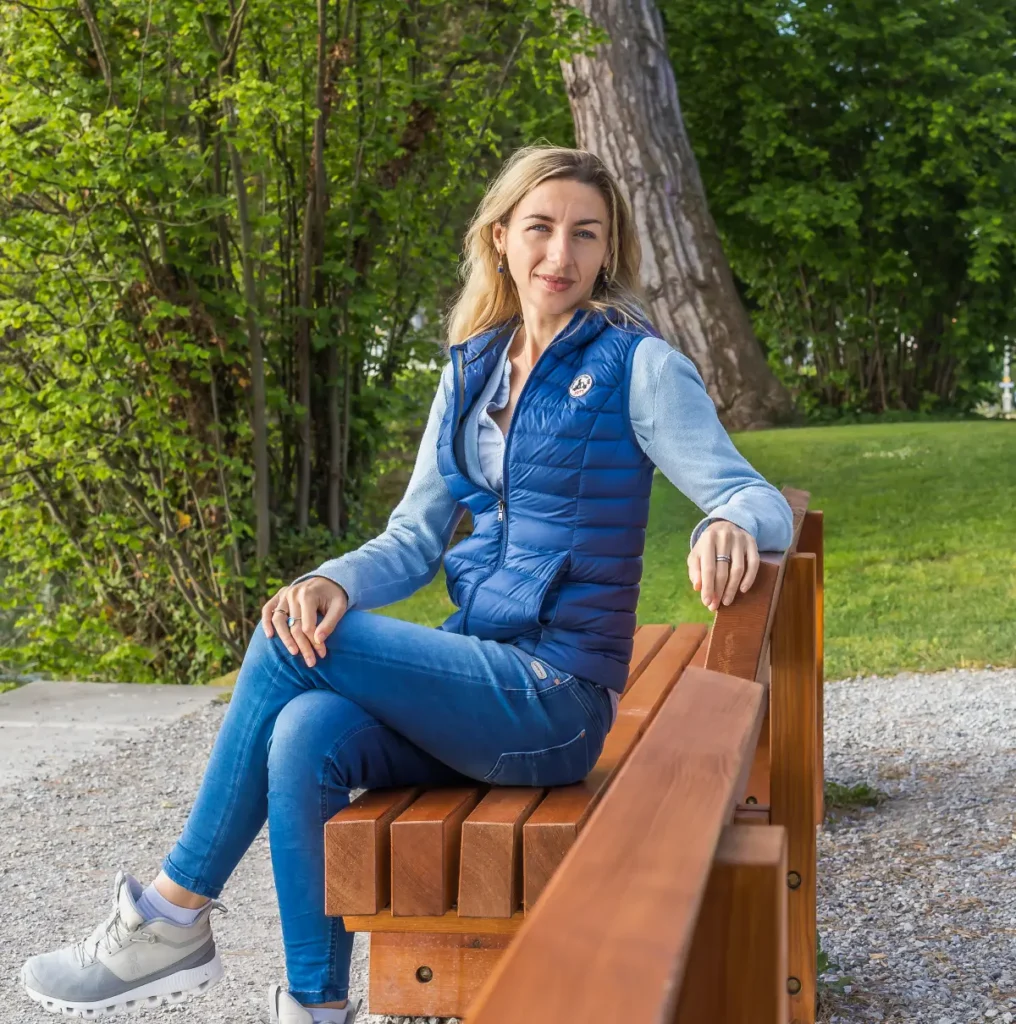
Your headshot becomes part of your executive positioning, especially in Switzerland, where first impressions are often formed quietly and quickly.
A strong executive portrait communicates credibility, maturity, warmth, steadiness, and confidence before a single conversation even begins.
This is one reason why many senior professionals choose to combine strategic executive positioning with professional personal branding support.
At Advanced Talent, while I support executives refine not only their CVs and networking strategy, our photographer, Adrian helps leaders create authentic executive portraits that feel aligned with who they truly are through his signature branding photography sessions.

If you want your image to be strategically positioned for the level of trust senior leadership roles require, book a session with Adrian.
Frequently Asked Questions About Swiss Executive Hiring
What is the “hidden job market” in Switzerland?
The hidden job market refers to leadership opportunities that are filled without being publicly advertised.
This is very common at executive level in Switzerland.
Many companies prefer to hire through trusted referrals, executive search firms, internal recommendations, or discreet networking conversations before publishing a role online.
In some cases, a position may never appear publicly at all.
This is why many senior executives feel confused when they apply extensively online but receive very little traction.
The opportunities exist, they are simply moving through quieter channels.
How do you network with Swiss executives without being pushy?
Swiss business culture generally values discretion, professionalism, and gradual trust building.
This means executive networking in Switzerland is usually more indirect and relationship focused than in some other countries.
Instead of aggressively asking for opportunities, focus first on creating thoughtful professional conversations.
Start small.
Reach out respectfully.
Suggest a short informational coffee or virtual discussion to exchange perspectives about the market, leadership challenges, or industry developments.
During the conversation, listen carefully, ask intelligent questions, and contribute value where relevant.
Over time, trust develops naturally.
And once trust exists, opportunities, introductions, and referrals often emerge much more organically.
Do I need to speak fluent German or French to land a C level role in Switzerland?
Not always.
In many multinational or global companies, English is often the primary working language at executive level.
This is especially true in industries such as pharmaceuticals, finance, consulting, technology, and international manufacturing.
However, speaking some German or French still creates a strong advantage.
Even basic language ability signals something important.
It shows willingness to integrate into Swiss culture and connect with local teams more effectively.
How long does an executive job search take in the Swiss market?
Executive hiring in Switzerland usually moves more slowly than many professionals expect.
On average, it takes around 3 to 6 months for EU and EFTA citizens to secure a role in Switzerland.
For non EU or third country nationals, the process often takes between 6 to 12 months, and sometimes longer.
This difference is largely connected to work permit regulations, hiring complexity, and the additional administrative steps companies must consider when sponsoring international talent.
Another element to consider is the strategy each candidate adopts during their job search. Applying to as many jobs as possible using the same CV might not get you very far. Whereas, if one focuses on quality rather than quantity, tailors their CV for each role and networks with a purpose, they can land an interview after 2 months, as lots of my clients did.
If you would like a deeper breakdown of Swiss hiring timelines, permits, and market realities, you can also explore our article about how long it takes to find a job in Switzerland.